
Poker equity explained for players who want the maths behind the bluff
If you have ever called a river bet and wondered whether the money was actually there, poker equity explained cuts straight to the numbers behind the decision. The idea is simple enough to grasp over a flat white at a Darwin cafe, yet layered enough to reward players who like to think in probabilities rather than hunches. I have spent plenty of time around slot mathematics and physics-driven game design, and the same discipline applies here: a casino game only stays fair when the underlying infrastructure is honest, auditable, and built to survive a long session. This review looks at how that thinking carries into a poker room, where equity is not a slogan but a working tool.
What poker equity explained actually measures at the table
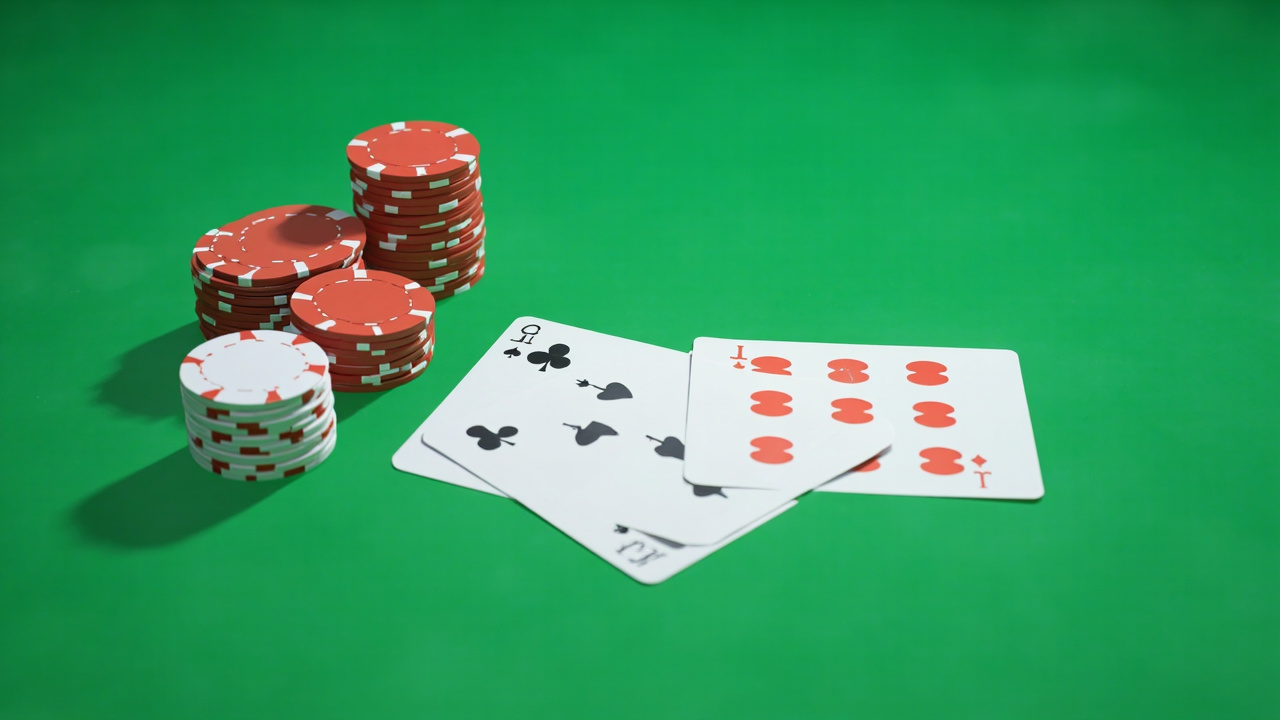
Poker equity explained is the percentage chance a specific hand has of winning by the time all five community cards land, given the cards still to come. It is not a prediction of what will happen this hand, and it is not a promise that a cooler will swing your way. It is a snapshot of probability that updates as the board develops, and that is where the maths stops being abstract and starts guiding real decisions. A flush draw on the turn might carry around 18 to 20 percent equity against a made hand, while a set holding up against two overcards can sit closer to 70 percent depending on the exact ranks involved. Those figures are not decorative; they tell you whether a call is mathematically defensible before the cards ever hit the felt.
The practical side is where the distinction matters most. Equity changes with position, with the number of opponents still in the hand, and with the cards you have already seen. A player who treats equity as a fixed number is misreading the room, because the same holding can shift dramatically once a third player folds or the turn card completes a straight draw. That is the kind of dynamic I look for in any gaming product, whether it is a reel layout driven by a physics model or a card room built around probability tables. The infrastructure has to be transparent enough that the numbers reflect the game, not the marketing around it.
| Hand situation | Approximate equity | What it usually means |
|---|---|---|
| Flush draw on the turn vs top pair | 18-20% | Call only with correct pot odds |
| Set vs two overcards on the flop | 70-75% | Often a value-bet candidate |
| Open-ended straight draw on the flop | 31-33% | Can justify a raise with right price |
| Top pair vs lower pair on the river | 85-90% | Usually a candidate to get money in |
The table above is a rough guide, not a rulebook, because exact figures depend on the specific ranks and the number of unseen cards. What it does show is that equity lives in ranges, and those ranges are what separate a guess from a justified call. A player who can read those ranges quickly is not relying on luck in the moment; they are relying on a framework that stays consistent across sessions. That consistency is the same quality I value in a well-built slot engine, where the return model is verifiable rather than mysterious.
How the numbers translate into calls, folds, and value bets
Once you have a handle on the percentages, the next step is learning when to act on them. Poker equity explained only becomes useful when it meets pot odds, because a 20 percent draw is a fine call if the price is right and a poor one if the bet is too heavy for the reward. The calculation is straightforward: compare the cost of the call to the size of the pot, then check whether your equity clears that threshold. If it does, the call is mathematically sound even when it loses this time. If it does not, folding is often the better long-term decision, regardless of how attractive the hand looks on the surface.
That discipline is where many casual players drift off course. A gutshot on the river can feel like a live hand, but if the equity is closer to 4 to 5 percent and the bet is large, the maths is already telling you to let it go. The same logic applies to value betting on the turn and river, where you are not just hoping to win but trying to extract chips from hands with lower equity. I have seen game designs that reward the same kind of patience, where the payout structure is built around probability rather than spectacle. A room that treats equity as a real variable rather than a buzzword tends to attract players who want to think, not just react.
• Compare the call cost to the total pot before deciding
• Check whether your hand’s equity clears that price
• Fold when the numbers say the bet is too expensive
• Value bet when your hand is likely ahead of weaker holdings
The list above is a working checklist, not a substitute for reading the table. Context still matters, because a player who never bluffs will change the way you play a marginal hand, and a tight table can make a modest equity hand more profitable than the raw percentages suggest. The point is that the numbers give you a starting point, and the rest comes from observing how the room actually behaves. That observation is the human layer sitting on top of the maths, and it is what keeps the game from becoming a dry exercise in arithmetic.
Where the maths meets the room design and the busy arvo
A poker room is only as good as the clarity of its tools and the honesty of its presentation, and that is where the review focus really tightens. A platform that takes equity seriously will give players access to clear hand history, sensible reporting, and a layout that does not hide the basic numbers behind flashy graphics. I have worked on slot mathematics where the physics model had to be auditable before any artwork was approved, and the same standard applies here: if the underlying infrastructure cannot be checked, the surface polish is just decoration. Players who care about equity want a room that respects that expectation rather than dressing it up.
The everyday usability matters just as much as the technical side. Registration should be straightforward, the mobile experience should keep the same information visible on a smaller screen, and support should be able to answer a practical question without sending you in circles. Currency handling and payment timing are part of that same picture, because a player who is tracking their results over a week wants to see those numbers line up without friction. None of this guarantees a winning session, and no room can promise that, but a well-built environment makes the maths easier to use and the decisions easier to trust.
When evaluating any platform, it helps to verify that the sign-in flow remains consistent across devices and that customer service actually resolves common issues on the first contact. You can review the current interface and access options through the sky crown login australia app, which demonstrates how a streamlined dashboard handles account verification and session management. Prioritizing these practical details ensures that the overall experience stays reliable, whether you are checking in from a desktop or a mobile device.
For players in Darwin or anywhere else where the heat lands and the session stretches into the arvo, that reliability is what separates a room worth returning to from one that feels like a distraction. The local detail matters because poker is often played in bursts around work, family, and the ordinary rhythm of the week, not only in long planned sessions. A room that fits into that rhythm without losing its clarity is a better fit for most adults than one that demands constant attention and still leaves the numbers murky. The equity is only useful if the room lets you actually use it.
Two player-fit scenarios where equity changes the session
The first scenario is the regular weekend player who treats poker as a thinking game rather than a night out at the reels. That player wants a room where hand history is easy to review, where the pot odds and implied odds are visible enough to check quickly, and where the stakes available match a sensible bankroll rather than a chase. Poker equity explained becomes a practical tool in that setting, because the player can look back at a session and see where the calls were justified and where the price was wrong. The room’s job is to keep that information accessible without clutter, and to let the player focus on the hand rather than on hunting for basic data.
The second scenario is the player who is still building their read on equity and wants a room that does not punish learning. That means clear game rules, sensible stake steps, and a layout that does not overwhelm the actual cards with noise. A player in that position is not looking for a shortcut to winning, because no such thing exists, but they do want a space where the maths is presented honestly and the game is easy to follow. I have judged plenty of game products by whether they make the underlying model visible to someone who wants to understand it, and the same test applies here. A room that passes that test tends to keep players who care about the numbers, while a room that hides them tends to lose them.
Both scenarios come back to the same point: equity is not a gimmick, and a room that treats it seriously is usually a better fit for adults who want to play with their eyes open. The maths does not remove variance, and it does not turn every session into a profit, but it does give a player a clearer view of what they are actually buying into. That clarity is the real value, and it is what I look for before I would recommend a room to anyone who cares about the numbers behind the cards.
If you are weighing up a room on the strength of its maths rather than its marketing, the test is simple: can you see the equity, use it, and review it without friction? A platform that answers yes to that question is usually one that respects the player’s time and the game’s actual structure. The numbers will still swing, the variance will still bite on a bad run, and no room can remove that, but the players who last are the ones who can tell the difference between a justified call and a hopeful one. That is the part worth paying attention to, especially when the session ends and the numbers are all that remain.